
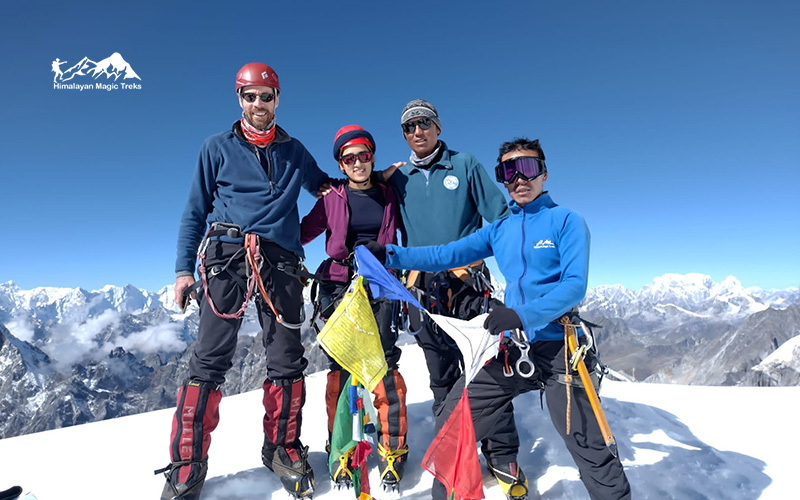
Island Peak climbing in Nepal offers a journey filled with breathtaking beauty and unforgettable experiences. Nestled in the heart of the Himalayas, this adventure begins with scenic trails through Sherpa villages, lush forests, and ancient monasteries, gradually revealing the towering giants like Everest and Lhotse. One of the most magical moments is witnessing the sunrise over snow-capped peaks, where golden light transforms the mountains into a surreal landscape. As climbers approach the summit, the thrill intensifies crossing glaciers, navigating icy ridges, and pushing personal limits. Standing atop Island Peak 6,189 m, surrounded by Panoramic Himalayan views, is a moment of pure triumph and awe. Beyond the climb, the warmth of local culture, the camaraderie among fellow trekkers, and the serenity of high-altitude wilderness make Island Peak a truly enchanting adventure one that lingers in memory long after the journey ends.
How to choose reliable guide for Island Peak climbing:
Choosing a reliable guide for Island Peak climbing is essential for both safety and a successful summit. Start by looking for guides or agencies with proper government registration and affiliation with recognized organizations like the Nepal Mountaineering Association. This ensures they meet basic standards for training and expedition management.
Experience matters greatly select guides who have led multiple Island Peak expeditions and are trained in high-altitude safety, first aid, and rescue procedures. asking for references of reliable Trekking agency who led everything their track record as well as past experiences. A trustworthy guide will also provide clear communication about the itinerary, costs, safety measures, and required equipment. They should prioritize acclimatization and be willing to adjust plans based on weather or team condition.
Finally, choose someone you feel comfortable with. A good guide not only ensures safety but also enhances your overall experience, offering local insight, encouragement, and confidence throughout the climb.
How difficult is Island Peak climbing:
Island Peak climbing 6,189 m is considered moderately difficult, making it a popular choice for trekkers looking to step into mountaineering. While it doesn’t require advanced technical expertise, it does demand good physical fitness, stamina, and basic climbing skills. The main challenges come from high altitude, long trekking days, and the final summit push, which involves glacier travel, steep snow and ice slopes, and the use of equipment like crampons, ropes, and ice axes. Altitude sickness can also be a concern, so proper acclimatization is essential. With prior trekking experience, some basic training, and guidance from experienced climbers or Sherpas, Island Peak is achievable for many adventurers. It’s a rewarding challenge that balances difficulty with accessibility, offering a true taste of Himalayan climbing.
How to prepare for Island Peak climbing with safety & Equipment required:
The Preparing for Island Peak climbing requires a mix of physical training, proper planning, and the right equipment to ensure both safety and success. Start your preparation at least a few months in advance by building endurance through hiking, workouts, and strength training focused on legs and core. Prior trekking experience at high altitude is highly recommended; as it helps your body adapts to thinner air and reduces the risk of Altitude Sickness. A gradual itinerary with proper acclimatization days is one of the most important safety measures. Equally important is having the right gear. Essential equipment includes strong mountaineering boots, crampons, an ice axe, climbing harness, helmet, and ropes for glacier travel. Warm layered clothing, including down jackets, thermal wear, gloves, and a quality sleeping bag, is necessary to withstand freezing temperatures. Sunglasses, headlamps, and trekking poles also add comfort and safety. Mountain Climbing with an experienced guide, staying monitoring weather conditions, and listening to your body fitness to a safe ascent with proper preparation and the right equipment, Island Peak becomes a challenging yet achievable Himalayan adventure.
Booking open for Island Peak climbing autumn 2026 & 2027
Booking is now open for Island Peak climbing in the autumn seasons of 2026 and 2027 with Himalayan Magic Treks & Expedition, offering an exciting opportunity to experience one of Nepal’s most popular trekking peaks. Autumn (September to November) is considered the best time for Island Peak climbing, with stable weather, clear skies, and stunning panoramic views of Everest, Lhotse, and the surrounding Himalayan. According to available trip details, Island Peak (6,189m) is a moderately challenging adventure that combines high-altitude trekking with basic mountaineering skills, making it ideal for both beginners and experienced climbers. With Himalayan Magic Treks, climbers can expect well-organized itineraries, experienced guides, proper acclimatization, and full logistical support from permits and accommodation to climbing gear and safety measures. Their packages typically include trekking through the Everest region, visits to iconic places like Namche Bazaar and Everest Base Camp, and a fully guided summit attempt. Secure your spot early for the 2026 & 2027 autumn departures and turn your Himalayan dream into reality with a trusted local team.
How to complete EBC and island peak climbing:
Completing the Everest Base Camp (EBC) trek along with Island Peak climbing is a rewarding journey that combines trekking and mountaineering in one itinerary. The adventure typically begins with a flight to Lukla, followed by a gradual trek through iconic Sherpa villages like Namche Bazaar, Tengboche, and Dingboche, allowing proper acclimatization before reaching Everest Base Camp. After exploring EBC and nearby viewpoints like Kala Patthar, climbers retrace their steps to Dingboche and head toward Chhukung, the gateway to Island Peak. Here, you’ll spend time preparing with basic climbing training, including the use of ropes, crampons, and ice axes. The summit push involves an early start, glacier travel, and a steady climb up snow and ice slopes. With proper acclimatization, guidance from experienced Sherpas, and good physical fitness, reaching the summit becomes achievable. The key to completing both EBC and Island Peak successfully lies in pacing yourself, staying hydrated, and prioritizing safety throughout the journey.
Is it Feat island peak climbing for beginner climbers:
Island Peak climbing (6,189m) is often considered suitable for beginner climbers, but calling it “easy” would be misleading. It’s a great entry point into Himalayan mountaineering, yet it still requires solid preparation, good physical fitness, and fortitude. For beginners with prior trekking experience, especially at high altitude, Island Peak is achievable with proper guidance. The climb involves basic technical sections such as walking on glaciers, using crampons, and ascending fixed ropes on a steep ice headwall near the summit. The main challenge is not just the climbing skills, but the altitude and long days of trekking in the Everest region. Beginners are strongly advised to train beforehand and climb with experienced guides who can provide instruction and ensure safety. In short, Island Peak is beginner-friendly in terms of technical difficulty, but it still demands respect, preparation, and the right support to successfully reach the summit.
Is it possible to organize full logistic for island peak climbing:
Yes, it is absolutely possible to organize full logistics for Island Peak climbing, and many climbers choose this option for convenience and safety. A fully supported expedition typically includes permits, domestic flights, accommodation, meals, experienced guides, porters, and all necessary climbing arrangements. Reputable trekking agency handle everything from airport pickup to expedition coordination in the Everest region. They arrange the required permits through organizations like the Himalayan Magic Treks & Expedition, manage acclimatization schedules, and provide essential climbing gear and safety equipment. A full logistics package also ensures proper planning for altitude adaptation, emergency support, and weather monitoring critical factors for a successful summit of Island Peak. This allows climbers to focus more on the experience rather than the technical details of organization. Overall, booking a complete logistics package is a practical and reliable way to undertake Island Peak climbing, especially for those seeking a well managed and stress free adventure.
After complete the island peak climbing successfully & Celebration with a Team:
Successfully summiting Island Peak is an unforgettable achievement, and the moments after the climb are filled with pride, relief, and pure joy. Standing together as a team after reaching the summit creates a deep sense of connection every step, challenge, and effort shared along the journey makes the success even more meaningful. The celebration often begins right at base camp or back in Chhukung, where climbers and guides come together to share stories, laughter, and gratitude. Simple moments hot meals, warm drinks, and heartfelt congratulations feel incredibly special after days of high-altitude effort. As the team descends through the Everest region, the sense of accomplishment continues to grow. Reaching places like Namche Bazaar often turns into a lively celebration, sometimes with music, dancing, and a small gathering to mark the success. In the end, it’s not just about reaching the summit, but about the friendships built, the challenges overcome, and the shared memories that make the Island Peak experience truly unforgettable.
Is it camp set at Island peak Base Camp for island peak summit plan:
Yes, setting up a camp at Island Peak Base Camp is a standard and essential part of the summit plan. Located at around 5,000–5,200 meters, Our Climbing Team will be prepared for Camp set by Himalayan Magic Treks & Expedition at Base Camp. Island Peak Base Camp serves as the main staging point before the final ascent of Island Peak. At base camp, climbers rest, acclimatize, and prepare for the summit push. This is where guides provide basic climbing training, including how to use crampons, ice axes, harnesses, and fixed ropes. It also allows the team to check weather conditions and finalize the climbing strategy. In most itineraries, climbers spend at least one night at base camp before attempting the summit, usually starting very early (around midnight or 1 a.m.). Some teams may also establish a higher camp (High Camp) to shorten the summit day, depending on time, fitness, and weather conditions. Overall, Island Peak Base Camp plays a crucial role in ensuring a safe, well-prepared, and successful summit attempt.
Do I Need pre-training for Island Peak climbing with our expert climber:
Yes, pre-training is highly recommended before attempting Island Peak, even when climbing with an expert guide or climber. While technical support will be provided during the expedition, your own fitness and preparation play a major role in a safe and successful summit. Pre-training should focus on building endurance, strength, and stamina. Activities like hiking with a backpack, running, cycling, stair climbing, and core strengthening exercises help prepare your body for long trekking days and high-altitude conditions. Familiarity with basic climbing techniques is also an advantage, especially for using equipment such as crampons, harnesses, and ice axes.
Climbing with an expert ensures proper guidance, safety instruction, and support throughout the journey, but training beforehand helps reduce fatigue and the risk of Altitude Sickness. In short, pre-training is not mandatory, but it is strongly advised. It significantly improves your confidence, safety, and overall success on Island Peak.
Can we see the best views from summit of Island Peak climbing:
Yes, reaching the summit of Island Peak rewards climbers with some of the most breathtaking views in the Himalayas. From the top at 6,189 meters, you are surrounded by a dramatic panorama of towering snow-covered giants and vast glacial landscapes. On a clear day, you can see iconic peaks like Lhotse, Ama Dablam, Makalu, and even parts of Everest in the distance. The view of endless ridges, icy valleys, and shimmering glaciers creates a truly unforgettable Himalayan experience. The sunrise from the summit is especially magical, as golden light spreads across the mountains, turning the entire landscape into a glowing sea of peaks. It is a moment of pure achievement and awe after a challenging climb. In short, Island Peak offers some of the finest high-altitude views in Nepal, making every effort of the climb deeply worthwhile.
Can I hire the equipment for Island Peak climbing:
Yes, you can easily hire most of the necessary equipment for Island Peak climbing instead of buying everything. In the Everest region and Kathmandu, many trekking shops and Himalayan Magic Treks provide rental gear such as down jackets, sleeping bags, crampons, ice axes, harnesses, helmets, and climbing boots. This is a practical option for many climbers, especially beginners or those who do not want to invest in expensive mountaineering equipment for a single expedition to Island Peak. However, it is important to ensure that all rented gear is in good condition, properly fitted, and suitable for high-altitude climbing. We also include essential technical equipment as part of their climbing package, along with guidance on how to use it safely. It is always recommended to check your gear in advance and test it during training or acclimatization days. In short, hiring equipment is not only possible but also a convenient and cost-effective way to prepare for Island Peak climbing.
Island Peak Climbing Itinerary:
Day 01: Arrival in Kathmandu – Welcome Program & Trip Preparation
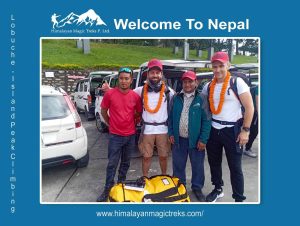
Upon your arrival at Tribhuvan International Airport in Kathmandu, a representative from Himalayan Magic Treks will warmly welcome you and transfer you to your hotel. After check-in and some rest, we organize a short trip briefing covering the Island Peak climbing itinerary, safety information, and final preparation for the adventure ahead. You will also have time to check your trekking equipment and explore the vibrant atmosphere of Kathmandu.
Day 02: Flight from Kathmandu to Lukla – Trek to Phakding
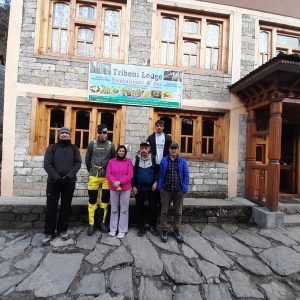
The Everest Base Camp adventure begins with an exciting scenic flight from Kathmandu to Lukla, offering spectacular aerial views of the Himalayas. Upon landing at Lukla Airport (2,860 m), the trek officially starts with a gentle walk through beautiful Sherpa villages, prayer flags, and pine forests alongside the Dudh Koshi River. After approximately 3 to 4 hours of trekking, you will reach the peaceful village of Phakding (2,610 m) for an overnight stay in Tribeni Lodge
Day 03: Trek from Phakding to Namche Bazaar
Today’s trek follows the beautiful Dudh Koshi River through pine forests, traditional Sherpa villages, and several suspension bridges decorated with colorful prayer flags. After entering Sagarmatha National Park at Monjo, the trail gradually climbs toward Namche Bazaar, the vibrant gateway to the Everest region. Along the way, trekkers enjoy the first distant views of Mount Everest and surrounding Himalayan peaks. Overnight stay at a tea house in Namche Bazaar (3,440 m).
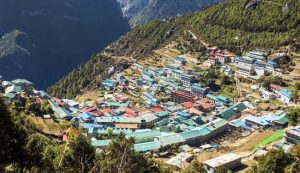
Day 04: Acclimatization Day in Namche Bazaar
Today is an important acclimatization day in Namche Bazaar to help your body adjust to the higher altitude. You can enjoy a short hike to Everest View Hotel or nearby viewpoints for stunning panoramic views of Mount Everest, Ama Dablam, Lhotse, and other Himalayan peaks. After the hike, explore the lively Sherpa town of Namche Bazaar, visit local markets, cafés, museums, and experience the unique mountain culture. Overnight stay at Namche Bazaar.
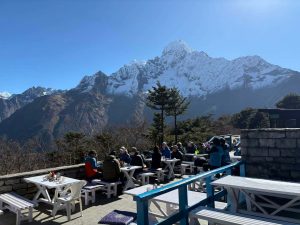
Day 05: Trek from Namche Bazaar to Tengboche (3,860m)
The trek from Namche Bazaar to Tengboche offers some of the most spectacular mountain scenery in the Everest region. The trail follows a scenic path with breathtaking views of Mount Everest, Ama Dablam, Lhotse, and Thamserku before descending to the Dudh Koshi River and climbing through rhododendron forests to Tengboche. This beautiful village is home to the famous Tengboche Monastery, the largest and most important monastery in the Khumbu region. Overnight stay at Tengboche with stunning Himalayan surroundings.
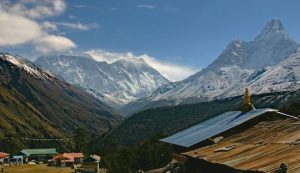
Day 06: Trek from Tengboche to Dingboche (4,360m)
Today’s trek continues through beautiful alpine landscapes with magnificent views of Ama Dablam, Island Peak, and surrounding Himalayan ranges. The trail passes through traditional Sherpa villages, crossing the Imja Khola River before gradually ascending to the peaceful village of Dingboche. Surrounded by stunning mountain scenery and stone-walled fields, Dingboche is an important acclimatization stop on the Everest Base Camp Trek. Overnight stay at Dingboche.
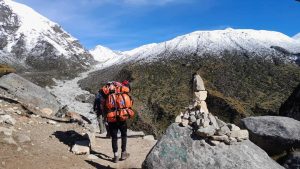
Day 07: Trek from Dingboche to Lobuche (4,940m)
Today’s trek gradually ascends through rugged alpine terrain with incredible views of towering Himalayan peaks and glacial landscapes. The trail passes through Dughla before climbing to the memorial site dedicated to climbers who lost their lives on Everest expeditions. From here, the route continues alongside the Khumbu Glacier to the small settlement of Lobuche. Overnight stay at Lobuche surrounded by dramatic mountain scenery.
Day 08: Trek from Lobuche to Gorak Shep (5,140m) and Everest Base Camp (5,364m)
Today is one of the most exciting and memorable days of the Everest Base Camp Trek. The trail follows rocky glacial paths alongside the Khumbu Glacier before reaching Gorak Shep, the last settlement before Everest Base Camp. After a short rest and lunch, the trek continues to the legendary Everest Base Camp (5,364m), surrounded by towering Himalayan peaks and dramatic ice formations. After celebrating this incredible achievement and enjoying the breathtaking scenery, return to Gorak Shep for an overnight stay.
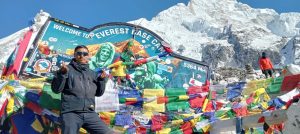
Day 09: Trek from Gorak Shep to Dingboche
After enjoying the incredible Everest region, the trek descends from Gorak Shep through the rocky trails of Lobuche and the beautiful Khumbu Valley toward Dingboche. Along the way, trekkers can enjoy stunning views of snow-capped peaks, glaciers, and alpine landscapes while breathing easier at the lower altitude. The trail passes through peaceful mountain scenery before reaching the charming Sherpa village of Dingboche for an overnight stay.
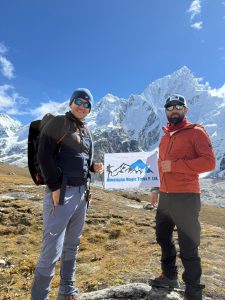
Day 10: Trek to Chhukung (4,730m) – 5/6 Hours
Today’s trek heads toward the beautiful village of Chhukung, located in the upper Imja Valley beneath towering Himalayan peaks. The trail gradually ascends through alpine landscapes with stunning views of Ama Dablam, Lhotse, Island Peak, and surrounding glaciers. After 5–6 hours of trekking, you will arrive at Chhukung, a peaceful settlement popular among climbers and trekkers preparing for peak expeditions. Overnight stay at a mountain lodge.
Day 11: Rest Day at Chhukung – Climbing Preparation
Today is a rest and preparation day at Chhukung to help with acclimatization and final climbing arrangements. Your climbing guide will check and organize all necessary climbing gear, including crampons, harness, ice axe, ropes, and other equipment required for the expedition. You may also receive basic climbing training and safety instructions to prepare for the upcoming ascent. Overnight stay at a lodge in Chhukung
Day 12: Trek to High Camp (5,600m) – 3/4 Hours
Today’s trek climbs steadily from Chhukung to High Camp, following rocky trails and glacial terrain beneath the towering Himalayan peaks. Along the way, climbers enjoy spectacular views of Island Peak, Lhotse, Ama Dablam, and surrounding mountains. After 3–4 hours of trekking, you will reach High Camp at 5,600 meters, where final preparations for the summit climb are made. Overnight stay at a tented camp surrounded by dramatic alpine scenery.
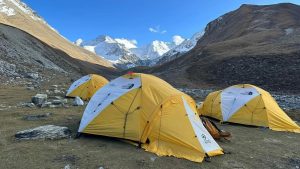
Day 13: Early Morning Climb to Island Peak Summit (6,189m) – Return to Chhukung (4,730m)
Today is the most exciting and challenging day of the expedition. Starting early in the morning, the climb to Island Peak Summit follows glacier routes, snow slopes, and fixed rope sections with the support of experienced climbing guides. Reaching the summit of Island Peak (6,189m) rewards climbers with breathtaking panoramic views of Mount Everest, Lhotse, Makalu, Ama Dablam, and surrounding Himalayan peaks. After celebrating the successful summit, descend carefully back to High Camp and continue trekking down to Chhukung. Total walking and climbing duration is approximately 9–10 hours. Overnight stay at a lodge in Chhukung.
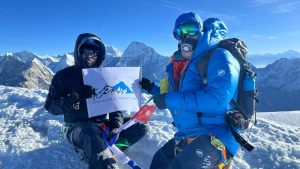
Day 14: Trek Down to Tengboche (3,860m) – 5 Hours
Today’s trek descends through beautiful alpine landscapes toward the famous village of Tengboche. Along the way, enjoy magnificent views of Everest, Ama Dablam, Lhotse, and other Himalayan peaks. Upon arrival, visit the renowned Tengboche Monastery, one of the most important and spiritual monasteries in the Everest region, surrounded by spectacular mountain panoramas. Overnight stay at a lodge in Tengboche.
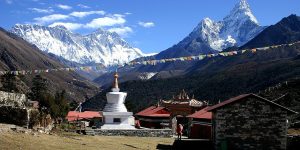
Day 15: Trek to Namche Bazaar – 5 Hours
Today’s trek continues descending through beautiful rhododendron forests, traditional Sherpa villages, and scenic mountain trails toward Namche Bazaar. Along the route, enjoy stunning Himalayan views and cross suspension bridges over the Dudh Koshi River. After approximately 5 hours of trekking, arrive at the lively Sherpa town of Namche Bazaar for an overnight stay at a comfortable lodge.
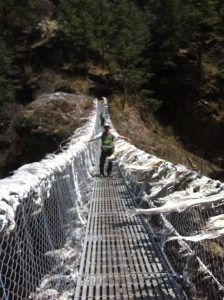
Day 16: Trek from Namche Bazaar to Lukla
Today marks the final trekking day of your Everest Base Camp adventure. The trail descends steadily from Namche Bazaar, passing through beautiful Sherpa villages, suspension bridges, and lush forests along the Dudh Koshi River. After crossing Monjo and Phakding, you continue the gentle walk back to Lukla. Upon arrival, celebrate the successful completion of your journey to Everest Base Camp with your trekking crew. Overnight stay at Lukla.
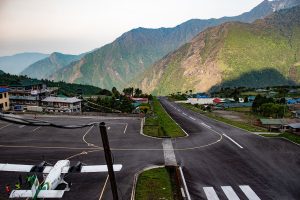
Day 17: Fly Back from Lukla to Kathmandu – Farewell Dinner
After an unforgettable Himalayan adventure, take a scenic morning flight from Lukla back to Kathmandu, enjoying final aerial views of the Everest region. Upon arrival, you will be transferred to your hotel for rest and relaxation. In the evening, join a special farewell dinner organized by Himalayan Magic Treks to celebrate the successful completion of your Everest Base Camp journey and share memories of the trek with your team.
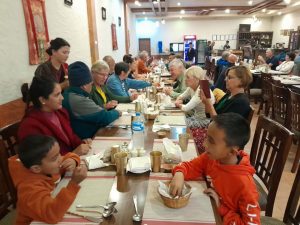
Day 18: Departure from Kathmandu
After completing your memorable Everest Base Camp Trek, you will be transferred from your hotel to Tribhuvan International Airport for your onward destination. Our team will assist you with a smooth departure, bidding you farewell with warm wishes and hoping to welcome you again for another Himalayan adventure.


Himalayan Magic Treks
A Himalayan travel contributor sharing destination guidance, local insight and practical planning advice.
Traveler Comments