
 French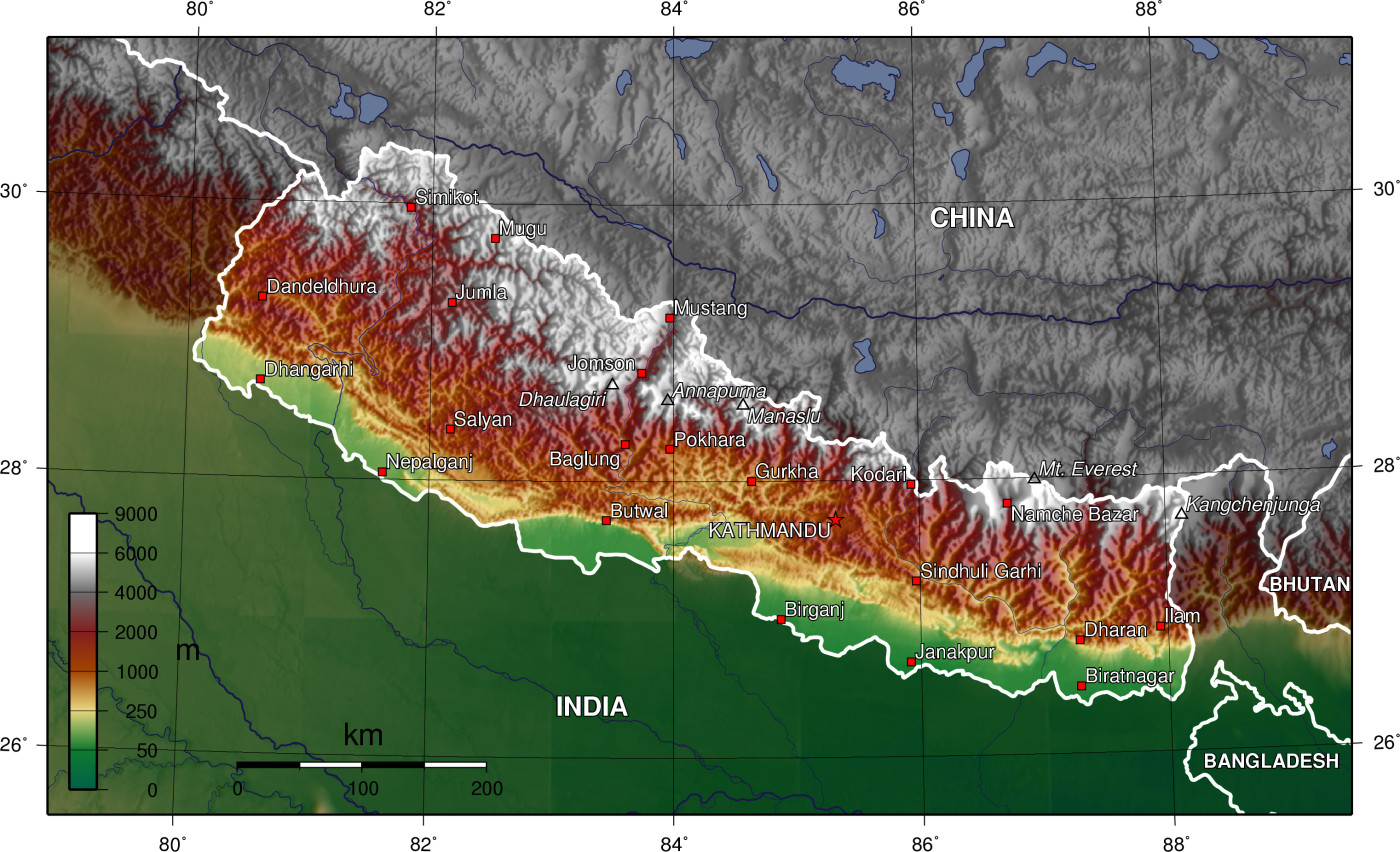
Table of Contents
12th Aug, 2026 by: Himalayan Magic Treks
Information about Nepal
Nepal is a beautiful country in South Asia, famous for its stunning mountains, rich culture, and natural beauty. It is home to Mount Everest, the highest mountain in the world. Nepal has diverse landscapes, from the Himalayas in the north to green forests and fertile plains in the south. The country is also known for its temples, festivals, traditional arts, and warm hospitality. Kathmandu is the capital city and a major cultural center. Nepal is a wonderful destination for travelers and nature lovers. Shaped roughly 800 km long and 160 km wide, it is bordered to the north by Tibet, with the Himalayan mountain range whose peaks form the backdrop to Nepal's landscapes. To the south lies the Terai region, a refuge for royal tigers, one-horned rhinoceroses, gazelles, wild peacocks, and a multitude of other animal and plant species in Chitwan National Park, which then extends into the plains of northern India.
The People of Nepal:
The beauty of Nepal stems not only from the mountains themselves but also from the discovery and encounter with its generous and welcoming people, comprised of diverse ethnic groups such as the Xetri, Brahmin, Newar, Magar, Tamang, Sherpa, Gurung, and Tharus, whose way of life has remained largely unchanged for generations. These ethnic groups are scattered throughout the country and sometimes intermingle. The population of Nepal is divided into two main groups: the Tibetan-Nepalese group, located in the mountains, and the Indo-Nepalese group, which primarily inhabits the plains and the Terai Valley. The official language is Nepali, but there are more than 61 different dialects.
Religion:
Hinduism is the official religion. Happiness lies in the identification of Brahman (the universal soul) with Atman (the individual soul). The soul is immortal and reincarnated according to the merits of previous lives. A person can be reborn in a higher or lower caste depending on their conduct. The three principal gods are: Vishnu: symbolizes knowledge, the preserving and protecting force of life. Shiva: also called Pashupati, both regenerator and destroyer. Brahman: venerated as the creator of all things.
Buddhism: the pursuit of wisdom through meditation and the rejection of suffering. The founder of Buddhism is Siddhartha Gautama, born in Lumbini, Nepal, around 550 BCE. He resolved to help his fellow human beings overcome suffering, and after various methods, he attained enlightenment and was called Buddha, or the Awakened One.
Cultural Sites:
Remarkably, seven of Nepal's ten World Heritage sites are listed by UNESCO. Thus, the stupas, monasteries, temples, and architecture are all representatives of Nepal's rich cultural heritage. Here are the cultural World Heritage sites of Nepal. Kathmandu Durbar Square, Patan Durbar Square, Bhaktapur Durbar Square, Changunarayan Temple, Swayambhunath Stupa, Pashupatinath Temple, Lumbini, Boudhanath Stupa, etc.
Visa Information:
A visa is required to enter Nepal (except for Indians) and can be obtained from any Nepalese Royal Embassy or Consulate or at points of entry into Nepal. (You can easily obtain a Nepalese visa upon arrival at Tribhuwan International Airport).
Important Information:
Once issued, a visa cannot be changed or refunded.
Personal checks and credit cards are not accepted for visa fees.
Visitors can also obtain a tourist visa at major points of arrival in Nepal, including Tribhuwan International Airport (TIA), Kathmandu. Requirements upon arrival: 1 passport photo, completed application form available at the point of entry.
Children under 10 years of age are exempt from visa fees.
A one-year visa covers the period from January 1st to December 31st of each year.
Entry validity:
Six months from the date of issue. The visa validity period begins on the date of arrival in Nepal.
Visa extension:
A tourist visa can be extended by the Kathmandu and Pokhara Immigration Bureaus for a total of 120 days. An additional 30-day visa may be granted based on housing assistance. During a one-year visa period, a tourist cannot stay in Nepal for more than a cumulative total of 150 days. A fee of $2 per day is required for visa extensions.
Passport:
A passport valid for at least six months is essential. Make a photocopy of your passport and keep it with you so you can leave your passport in a safe place in Kathmandu.
Airport Pickup:
Upon exiting the airport, you will be met by someone holding a Himalayan Magic Treks sign, who will escort you to your hotel. We cannot enter the airport itself, as those without a flight ticket are not permitted entry.
Currency:
The currency of Nepal is the Nepalese Rupee (RN), with an exchange rate of approximately 150-152 RNs to $1. Upon arrival, you can exchange currency at the airport near the visa counter. In Kathmandu, there are numerous exchange bureaus offering more favorable rates. Bring the necessary currency in small denominations before your trek; this will make it easier to receive change.
Climate:
All climates are present in Nepal and change with altitude. Tropical in the jungle, temperate