
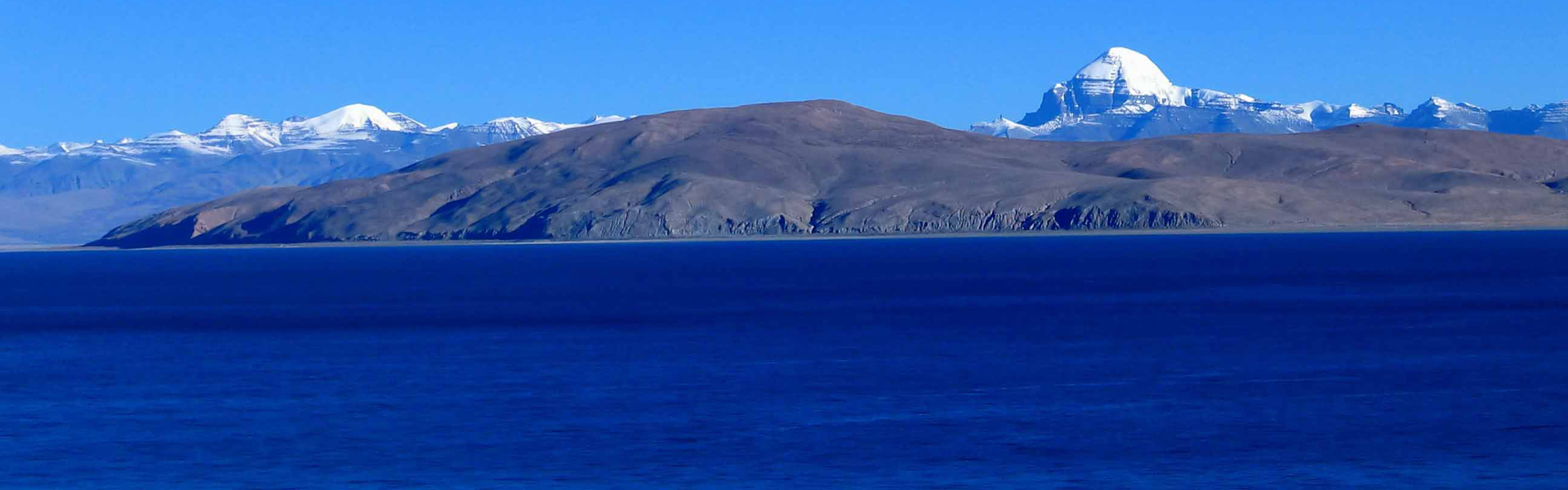
Spiritual Significance of Mount Kailash and Lake Mansarovar: Mount Kailash and Lake Mansarovar are among the most sacred pilgrimage destinations in the world. Located in the remote Himalayas of Tibet Mount Kailash is revered by Hindus, Buddhists, Jains, and Bon followers. Hindus believe it is the abode of Lord Shiva, while Buddhists regard it as the dwelling place of Demchok, representing supreme bliss.
Lake Mansarovar, situated at the foot of Mount Kailash, is considered a symbol of purity and spiritual enlightenment. Pilgrims believe that bathing in its holy waters cleanses sins and brings spiritual merit. The sacred circumambulation (Kora or Parikrama) of Mount Kailash is regarded as a profound act of devotion that helps devotees attain inner peace and liberation. Together, Mount Kailash and Lake Mansarovar inspire faith, devotion, and spiritual transformation, attracting thousands of pilgrims and seekers from around the world each year.
The Mount Kailash located western in Tibet, a peak that has never been climbed but is revered by millions as the spiritual center of the universe. Just beside it rests the serene Lake Mansarovar, a turquoise-blue freshwater lake believed to hold divine powers of purification. Together, these two natural wonders form one of the world’s most sacred destinations an epicenter of faith, mystery, and timeless devotion.
For centuries, pilgrims from India, Nepal, Bhutan, and across the globe have undertaken the challenging journey to this holy region, believing that a single visit to Kailash and Mansarovar can transform one’s soul and wash away lifetimes of karma. But beyond its religious significance, this journey offers a rare blend of adventure, cultural immersion, and natural beauty—making it one of the most extraordinary travel experiences you can ever have.
We’ll explore the spiritual significance of Mount Kailash and Lake Mansarovar, their role in four major religions, myths and legends surrounding them, and practical tips for planning your once-in-a-lifetime Kailash Tour.
Why Mount Kailash is Called the “Axis Mundi”
In many spiritual traditions, the world is believed to have a cosmic axis a sacred center that connects heaven, earth, and the underworld. For Hindus, Buddhists, Jains, and Bon followers, Mount Kailash is that very place. Its symmetrical, pyramid-like peak rising above the barren Tibetan Plateau is not just a mountain—it’s a divine symbol of balance, power, and eternity.
Unlike other famous peaks such as Everest, no climber has ever set foot on Kailash’s summit. Attempts were discouraged, and both Chinese and international mountaineers eventually respected its sanctity. This untouched peak remains pure, embodying the belief that some places on Earth should remain forever sacred.
The Four Religions of Kailash
What makes Mount Kailash and Lake Mansarovar truly unique is their multi-faith reverence. No other mountain in the world holds equal importance across four major religions.
⇒ Hinduism – The Abode of Lord Shiva
For Hindus, Kailash is the mythical home of Lord Shiva, the destroyer and transformer in the holy trinity of Brahma, Vishnu, and Shiva. Here, Shiva is said to meditate in eternal bliss alongside his consort Parvati.
⇒ The Kailash Parikrama (circumambulation), a 52 km trek around the mountain, is believed to erase sins of a lifetime.
⇒ Bathing in Lake Mansarovar is said to cleanse both body and soul, ensuring salvation.
⇒ Buddhism – The Mandala of the Universe
In Buddhism, Kailash is considered the dwelling place of Demchok (Chakrasamvara), representing supreme bliss. Tibetan Buddhists see the mountain as a giant mandala, the perfect representation of the universe.
→ Pilgrims perform kora (circumambulation), which symbolizes a spiritual journey toward enlightenment.
→ Lake Mansarovar is linked to the legendary story of Queen Maya, who conceived Buddha after bathing in its waters.
⇒ Jainism – Liberation at Kailash
For Jains, Kailash (known as Mount Ashtapada) is the site where Rishabhadeva, the first Tirthankara, attained moksha (liberation). A pilgrimage here is considered the ultimate act of spiritual purity and freedom.
⇒ Bon Religion – The Seat of Spiritual Power
The Bon faith, older than Buddhism in Tibet, holds Kailash as the spiritual seat of Sipaimen, their sky god. For Bon followers, circumambulation must be done counter-clockwise, unlike the clockwise path of Buddhists and Hindus.
Lake Mansarovar: The Sacred Waters of Purity
Sitting at an elevation of 4,590 meters, Lake Mansarovar shines like a mirror of the sky. Its pristine waters are believed to have been created by Lord Brahma in his mind before being manifested on Earth—hence the name “Mansarovar” (from Sanskrit: Manas = mind, Sarovar = lake).
→ Hindus believe that a ritual bath in Mansarovar purifies sins from countless lifetimes.
→ Buddhists consider drinking its water a path to spiritual clarity and enlightenment.
→ Many pilgrims perform a circumambulation (parikrama) of the lake, walking along its 90 km shoreline.
The lake is also geologically unique—it is one of the highest freshwater lakes in the world, sitting next to the dark, saltwater Lake Rakshastal, symbolizing the eternal balance of good and evil.
Myths and Legends Surrounding Kailash
Mount Kailash is more than just a pilgrimage site—it is a canvas of myth and storytelling:
→ The Cosmic Churning (Samudra Manthan): Hindu mythology places Kailash at the center of the cosmic ocean churning for nectar of immortality.
→ The Ladder to Heaven: Ancient scriptures describe Kailash as a ladder leading directly to heaven, a bridge between the mortal and divine.
→ The Unclimbed Mountain: Local Tibetans say anyone who tries to conquer the peak will face spiritual punishment. Stories tell of mountaineers who perished mysteriously after attempting the climb.
The Pilgrimage Journey: Kailash Mansarovar Yatra
Embarking on a Kailash Mansarovar Yatra is more than just a trek—it’s a test of faith, endurance, and inner strength. With Himalayan Magic Treks, you can choose guided itineraries that blend spiritual rituals with comfortable travel arrangements.
Key Highlights of the Journey
- Kailash Parikrama: A 3-day trek covering 52 km around the mountain at high altitude.
- Dolma La Pass (5,630 m): The most challenging yet rewarding section, symbolizing death and rebirth.
- Lake Mansarovar Rituals: Pilgrims bathe, meditate, and collect sacred water from the lake.
- Cultural Encounters: Meet Tibetan locals, visit monasteries, and witness centuries-old traditions.
👉 Learn more about our full itinerary on the Kailash Tour page.
Practical Tips for Travelers
If you’re planning to join the Kailash Tour, here are some important things to know:
Best Time to Visit
→ May to September is the ideal season, when the weather is relatively mild, and high passes are accessible.
Fitness Level Required
→ Moderate to high fitness is recommended. You don’t need to be an elite trekker, but preparing with cardio, hiking, and strength training will help.
Travel Permits
- Since Kailash lies in Tibet, special permits are required. As your trusted operator, Himalayan Magic Treks takes care of all arrangements, including Tibet Travel Permits and Chinese Visa.
Packing Essentials
- Warm clothing, good trekking boots, medicines for altitude sickness, spiritual offerings, and personal snacks.
- Bring reusable bottles to collect water from Lake Mansarovar.
Conclusion: A Journey of the Soul
Visiting Mount Kailash and Lake Mansarovar is not just about reaching a destination—it’s about transformation. The trek challenges your body but uplifts your spirit. It connects you to ancient wisdom, divine stories, and the sacred energy of nature.
Whether you’re seeking liberation, inner peace, or simply a deeper connection with the world, this journey offers it all. As you walk around the holy mountain or gaze into the turquoise waters of Mansarovar, you’ll feel a sense of timeless serenity that stays with you long after the journey ends.
Are you ready to experience the spiritual journey of a lifetime? Join our professionally organized Kailash Tour with Himalayan Magic Treks. With 15+ years of expertise, trusted guides, and personalized service, we ensure your pilgrimage is safe, meaningful, and unforgettable.

Himalayan Magic Treks
A Himalayan travel contributor sharing destination guidance, local insight and practical planning advice.
Traveler Comments