

 French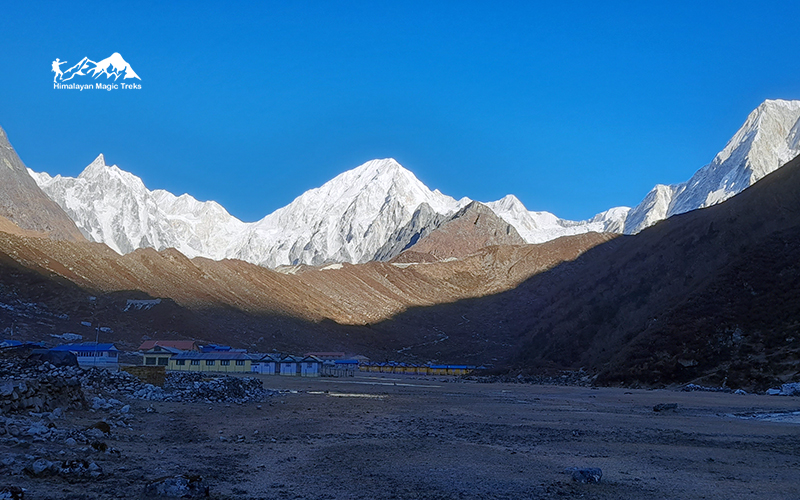
Table of Contents
11th Jan, 2025 by: Himalayan Magic Treks
A complete Guide for Manaslu Circuit Trek
The Manaslu Circuit Trek is one of the most scenic and challenging trekking routes in Nepal, located in the Manaslu region. It offers a blend of natural beauty, cultural experiences, and a glimpse into remote villages, with the majestic Manaslu (8,163 meters) towering over the landscape. Here's a detailed overview of the trek, including its difficulty, itinerary, cost, and special permits.
Manaslu Circuit Trek Overview:
- Region: Manaslu, Nepal
- Max Altitude: 5,160 meters (Larkya La Pass)
- Duration: 14-18 days (depending on itinerary)
- Trekking Season: Best during Spring (March-May) and Autumn (September-November)
- Difficulty: Moderate to Challenging
Difficulty of the Manaslu Circuit Trek
The Manaslu Circuit Trek is considered a moderate to difficult trek. Several factors contribute to its challenge:
1. High Altitude: The highest point of the trek is the Larkya La Pass (5,160 meters), which presents a risk of altitude sickness.
2. Length and Duration: The trek typically lasts between 14 to 18 days, requiring stamina and endurance.
3. Remote Terrain: While the trek is well-marked, it involves walking through remote and rugged terrain, including steep ascents and descents.
4. Weather Conditions: The weather can change rapidly, especially around the Larkya La Pass, which can be challenging for trekkers.
5. Limited Facilities: Compared to popular treks like the Annapurna Circuit, there are fewer tea houses and accommodations along the route.
Itinerary for the Manaslu Circuit Trek
Day 1: Drive from Kathmandu to Soti Khola
- Duration: 7-8 hours
- Altitude: 700 meters
- The trek begins with a drive from Kathmandu to Soti Khola, which marks the start of your trek.
Day 2: Trek from Soti Khola to Machha Khola
- Duration: 6-7 hours
- Altitude: 900 meters
- You’ll follow the Budhi Gandaki River, passing through small villages and lush forests.
Day 3: Trek from Machha Khola to Jagat
- Duration: 6-7 hours
- Altitude: 1,410 meters
- The trail ascends steadily, passing through bamboo forests and small settlements.
Day 4: Trek from Jagat to Deng
- Duration: 6-7 hours
- Altitude: 1,860 meters
- The landscape begins to change as you enter more remote and less inhabited areas.
Day 5: Trek from Deng to Namrung
- Duration: 6-7 hours
- Altitude: 2,630 meters
- Enjoy great views of the surrounding peaks and landscapes.
Day 6: Trek from Namrung to Samagaon
- Duration: 6-7 hours
- Altitude: 3,530 meters
- Samagaon is a large village with a spectacular view of Manaslu and the surrounding mountains.
Day 7: Acclimatization Day in Samagaon
- A day for rest and acclimatization to adjust to the altitude. You can explore the local monastery or take short hikes in the area.
Day 8: Trek from Samagaon to Samdo
- Duration: 3-4 hours
- Altitude: 3,860 meters
- A shorter trek to allow for further acclimatization. Samdo is a small Tibetan-style village.
Day 9: Trek from Samdo to Dharmashala
- Duration: 4-5 hours
- Altitude: 4,460 meters
- The trail continues to gain altitude, heading towards the Larkya La Pass.
Day 10: Trek from Dharmashala to Larkya La Pass to Bimtang
- Duration: 8-10 hours
- Altitude: 5,160 meters (Larkya La Pass)
- This is the most challenging day of the trek. After crossing the high-altitude Larkya La Pass, descend to Bimtang for rest.
Day 11: Trek from Bimtang to Tilje
- Duration: 6-7 hours
- Altitude: 2,300 meters
- You’ll descend through forests and small villages towards lower altitudes.
Day 12: Trek from Tilje to Dharapani
- Duration: 5-6 hours
- Altitude: 1,860 meters
- Descend further through lush forests and pass through villages.
Day 13: Trek from Dharapani to Besisahar
- Duration: 4-5 hours
- Altitude: 760 meters
- Final day of the trek, where you drive or walk to Besisahar.
Day 14: Drive back to Kathmandu
- Duration: 6-7 hours
- The trek concludes with a drive back to Kathmandu.
Cost of the Manaslu Circuit Trek
The cost of the Manaslu Circuit Trek varies depending on the services you choose. A general breakdown is as follows:
1. Guide & Porter Fees:
- Guide: $25-30 Per day
- Porter: $18 -20 Per day
2. Permits:
- Manaslu Restricted Area Permit (RAP): $100 (for the first 7 days) + $15/day for additional days
- Annapurna Conservation Area Permit (ACAP): $30
- Manaslu Conservation Area Permit (ACAP): $30
- Trekking Information Management System (TIMS): $10
3. Accommodation & Meals:
- Tea Houses: $10-15/night for accommodation, It depends on Lodge types
- Meals: $25-30/day (basic meal options)
4. Transport (Kathmandu to Soti Khola & return):
- Local bus transport: $20-40 one way
5. Total Estimated Cost:
- For a basic trek, expect the cost to be around $1,300 - $1,600 for a 14-16 day trek, excluding flights to/from Nepal.
Special Permits for the Manaslu Circuit Trek
Since the Manaslu region is a restricted area, trekkers are required to obtain special permits. The necessary permits include:
1. Manaslu Restricted Area Permit (RAP):
- Required for all trekkers entering the Manaslu Conservation Area.
- It’s issued by the Department of Immigration in Kathmandu.
- The cost is $100 for the first 7 days, with an additional $15 per day for extra days.
2. Annapurna Conservation Area Permit (ACAP):
- Required as the trek passes through the Annapurna Conservation Area.
- Manaslu Conservation Area. Approximately $30.
3. Trekking Information Management System (TIMS) Card:
- Required for all trekkers in Nepal.
- Cost: Around $10.
- You’ll need to arrange these permits through a registered trekking agency, as a group of at least two trekkers must be accompanied by a licensed guide.
- The Manaslu Circuit Trek is a beautiful and challenging adventure that offers a glimpse into Nepal’s remote mountain life. It’s not as crowded as other popular treks, making it a great choice for those looking for a more off-the-beaten-path experience. Be prepared for the physical demands, and ensure you have the proper permits, equipment, and a licensed guide to make your trek safe and enjoyable.